Musings on music, old, new, popular and obscure. Post punk, metal, hip-hop, funk, and rock in general. A music fan with a desire to lose boundaries on what should and should not be listened to writes about experience in music from a listener's perspective, hopefully unhindered by prior expectation.

Sunday, September 23, 2012

If You Do Spread Your Wings, Please Let Me Know -- Kno's Death Is Silent

Actually quite similar to how I run into a lot of metal these days, no longer hanging around any metal heads, I was unfamiliar with CunninLynguists in general and Kno in specific for certain. This happens a lot with rap, which seems to run in an even greater variety of strains and layers. There's obviously the readily available and apparent mainstream rap, there's heavily familiar underground rap, there's the more intricate varieties that focus on wordsmithing, there's the hybrid forms that meld with other genres, and the kind that has determined fans without any major hook from violating expectations. Heck, there's more beyond that. Still, it makes it increasingly difficult to get a handle on whether you might like an artist or not without simply listening. On the bright side, the nature of rap means hearing it live is one of the more accurately represented genres, so long as the place you hear it has reasonable sound and the DJ (or laptop) is solid, it bears a pretty strong resemblance to the recorded material.

When I saw this album, it screamed "independent rap," but that's a pretty wide swath of music to plow through, and there's no telling what it means. The one advantage metal does have is that, while the named genre or subgenre can be misleading, it does at least give a starting point. Subdivision of rap hasn't taken enough hold to become widespread. There are certainly vibes and feelings that I break apart in my head for my own moods, or to attempt to share a genre that receives a lot of hatred or at least dislike in the kind of circles I most often find myself in.

I mistakenly first believed this was a CunninLynguists album, as it is marked as "CunninLynguists Presents," but it is in fact the first solo album from producer/emcee Kno, who is from that duo or trio (depending on when you are discussing). I'd heard the name, outside of the obvious pun that inspired it, and was pretty sure I'd heard it associated with talent, which is what drove the (rather cheap) purchase of what I discovered was an out-of-print album.

Kno's beats are loop-oriented and relatively lo-fi, spare and heavy on vocal sampling. The title of the entry actually refers to the song "Spread Your Wings," which also features fellow CunninLynguist Deacon the Villain:


The abstract notion I have of the subdivision this falls into is somewhat confused. The beats are reminiscent of both the underground varieties of "mainstream" rap (as opposed to the more introspective varieties), and indeed the lyrical material makes reference to sex (particularly in "La Petit Mort," the French term for orgasm, I've heard--making it a clever insertion on an album that is intended to deal in the matters of death) and drugs more explicitly and at greater length than in most of the rap I do listen to regularly.

At the same time, the lyrics are also in that same vein, in that the words are impressive more in terms of rhyme scheme and witty wordplay than in terms of their perceptiveness. It seems, by and large, to be in that vein of rap that's not been moved into territory that makes it comfortable for those who "don't like rap," and is simply underground because it is not of the modern production techniques.

Kno's voice, to be honest, is a bit awkward and is regularly outdone by his guests, be they his regular group members (the aforementioned Deacon the Villain as wellas Natti) or others who appear. His words are often clever, though sometimes a bit forced, and his articulation is somewhat peculiar and uncomfortable, as if he hears his voice in a different way than it comes out. He has great control and the flow isn't off, but the emphases and the enunciation make things a bit weird--think of someone forcing a dialect unnatural to them and you may have an idea of what I mean.

The production, however, which is what Kno seems to be best known for, is excellent. And, as a bonus, the album proper is followed by instrumental versions of most of the tracks unlisted on the CD version of the album.

I do recommend giving it a listen, whatever reservations I might have, for the production to be sure, but also for those who may feel differently about Kno's voice.

You can check it out (and purchase it directly from the group) over at bandcamp.

Friday, September 21, 2012

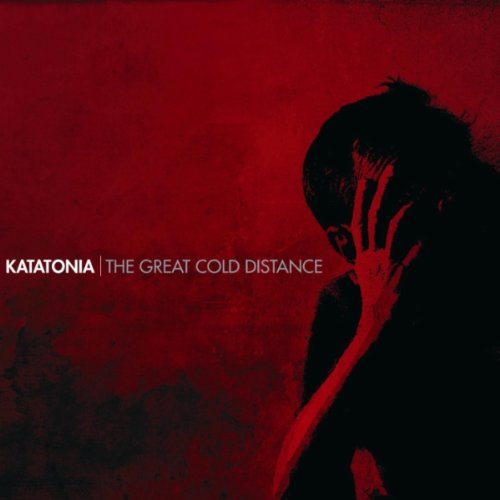
You Used to Be Like My Twin -- Katatonia's The Great Cold Distance

One of the most simple yet random of the purchases I made some time ago, Katatonia's The Great Cold Distance is my first ever Katatonia album, and, indeed, my first ever listen to Katatonia at all. The name rang bells from the days I hung about a discussion forum based around metalheads in college. I can't actually guarantee those bells were ringing correctly, but I figured that for a brand new copy of the album at $2, I couldn't complain too much.

My notion going in was that they were going to be on the more commercial and accepted side of extreme metal. I found through a quick round of sampling that I was more right than I suspected. They aren't really in the range of extreme metal at all. They may have been previously, though their home being Sweden, there's a strong strain of more readily accessible metal wandering there, much of it falling into that subgenre "melodic death metal" or "melodeath," which this isn't. Jonas Renkse flat out sings consistently throughout the album, nowhere approaching the "growl" of death metal.

The album did drop one single, "My Twin," which is a solidly catchy song:


Wikipedia justifiably has editors classifying the album as "alternative" or "gothic" metal, which is quite reasonable. The inherent tone, both musically and lyrically is rather somber and depressed. There are some weird arguments flying about how they sound like Tool, but this reflects more on some choices in a few odd vocal effects and some approaches to guitar riffs on occasion, but overall doesn't bear out too much.

If you will allow the phrase, it's a very pleasant album. Obviously, with the tone, this isn't exactly the right sort of word, but I think we all know that rather "down" music can indeed be very enjoyable despite this. And this album is very much that. It's interesting to hear it come from the general community of metal as well, where musicianship is emphasized enough that the experience with it does show in the performances on this album.

Saturday, September 8, 2012

Blue, Why Don't You Stop and Look at What's Going Down? -- The Jayhawks' Music from the North Country

Sometimes, connections are just strange. I last wrote of Jaguar Love, who I found because, well, I liked the bands its members came from--simple enough. The Jayhawks, however, are something entirely different. I'm not sure if I heard their name before I looked into them, and I'm not completely certain I didn't hear their two bigger, earlier singles on the radio when I was younger. I did live in Missouri growing up, though, so it's entirely possible dim memories of "Jayhawks" relate only to one of my then-neighboring state's mascots.

When I finally looked into this band, though, it was because of an offhand reference to the song "Six Pack" by Black Flag, which was met with a reference to "6 Pack on the Dashboard" from The Bunkhouse Tapes, the semi-official title (a la The White Album/The Beatles) for the Jayhawks eponymous debut on Bunkhouse Records. I didn't know that, and simply used Google to find out where this reference came from.I found it was the Jayhawks and looked for an example of their music, as this was made by Gerald, who I've mentioned on many other occasions. I stumbled into a video of "Save It for a Rainy Day":

I ran into a copy of their post-reformation latest album, Mockingbird Time, and was pretty well taken. I referenced the album in one of my endless lyrical entry titles not too long ago, but also picked up the recent deluxe edition of Tomorrow the Green Grass. I saw this anthology, Music from the North Country, a few times before I picked it up. My disineterest in best-of collections, however, collided with my love of music videos--as well as the fact that, in this 3-disc deluxe edition, there was also a disc of bonus material, as well as the only location for their relatively small videography. I was finally pushed over the edge by the presence of "Save It for a Rainy Day," being my immediate introduction to the band and coming from an album old enough that it wasn't going to show anywhere new, but unpopular enough--and released recently enough--that it was not going to appear used very often.

Wednesday, September 5, 2012

Parades Burst from Your Brain, Plaid Haired Girls Call Your Name -- Jaguar Love

This is simultaneously the easiest and most difficult thing to write about as I go through my slew of purchases from the few days I photographed previously. This is actually a 3-song EP released in 2008 by Jaguar Love before they had completed an album. I bought it because I owned both of their albums, 2008's Take Me to the Sea and 2010's Hologram Jams and this was the only track left I did not own. Chaz over at Bull City Records had a copy in his discounted new CDs and I'd picked up Take Me to the Sea from him on vinyl not long before that, so it was a given (much like picking up The Hookers, the band The Murder City Devils were formed from, which Chaz emphasized--no surprise, as we first met minds over my purchase of the Devils' In Name and Blood on vinyl from his store at its old location, on my first ever Record Store Day). So, easy: one track. Not question about where to start on that, of course! Catchy as hell, if you like Johnny's vocals (which I do!). "Black water, in a crystal skull/Drink deep, hallucinate an ancient ocean/Black water, flowing out your mouth..."


Now, I guess the next question--easy to tell, but lengthy--is who are Jaguar Love?

Well, I have actually mentioned them before, and indeed briefly relayed their history. Jaguar Love, at the time of this EP, was composed of Johnny Whitney, Cody Votolato (younger brother of more famous Rocky Votolato) and Jay "J." Clark. Now here we practically need a chart, but I'd spend too much time on it and it would look terrible anyway, so bear with me. Johnny and Cody were most famously in the Blood Brothers, an extremely strange, experimental and abrasive post-hardcore band from Washington (the state) who broke up in 2006 after releasing their fifth album, Young Machetes.

Cody played guitar in both bands, and Johnny sang in both, as well as in another splinter band, Neon Blonde. Neon Blonde released one album and one EP in 2005, before the Blood Brothers broke up, but were also composed of "alumni": Johnny, of course, and drummer Mark Gajadhar. Mark handled all the percussive elements and Johnny did, well, everything else (with the exception of the saxophone's occasional appearances, by Joel Caplin). Neon Blonde is, by far, the weirdest, with Johnny's voice at one point accompanied by drums and piano and nothing else. Jay Clark remixed a Neon Blonde song on their EP Headlines, thus foreshadowing his later appearance in Jaguar Love.¹

I started it all, though, from the Blood Brothers. I picked up most of their latter era albums, beginning with Crimes and following with Young Machetes, ...Burn, Piano Island, Burn, and March on Electric Children because they were re-issued by major punk label Epitaph in "deluxe" editions with extra discs of live shows, concert video and b-sides. I was still working at Borders at the time and had never heard of them, but darned if they didn't look interesting, and the idea of these albums being re-released and completely unheard of fascinated me. The prices were solid, too--MSRPs for deluxes at around $16, so I just went for it. I didn't regret it, and later picked up This Adultery Is Ripe, their first album and Rumors Laid Waste, the collection of their early 7"s and splits.

I heard that after they broke up, Johnny had formed these other bands (of course, I found out Neon Blonde was formed before they broke up, but nevermind!) and happened to stumble into Hologram Jams around that time. Clark had actually left the band at this point, leaving it Cody and Johnny and a drum machine for even live performance.

That's about as close as you can get to understanding what the logic behind looking into a band no one has ever mentioned to me and I've never heard of is. It's rough and odd and somewhat arbitrary--though the idea that a reissue of an entire indie catalogue is somewhat leading, to be fair.

And yes, I realize Johnny's voice is utterly repellent to many people. I really (sincerely!) like it, though.


¹Let's be really amusing here:
The first Blood Brothers EP was recorded in the "soft underbelly of the Jake Snider Residence." Jake Snider was the vocalist/guitarist for Sharks Keep Moving, and currently fronts Minus the Bear. Minus the Bear's most famous guitarist is doubtless Dave Knudson, though, who was in Botch. Further, Clark's prior gig was Pretty Girls Make Graves, whose first EP was released on Dim Mak Records, who released all of Neon Blonde's work. Pretty Girls, of course, were a sort of splinter from the Murder City Devils, who formed from the Hookers, whose drummer became Pretty Girls' vocalist. Apparently, if you're from Seattle and in a band, everyone knows everyone and played in their band, their bandmate's band, or their brother's, or produced it, or shared a label. It's kind of mind-blowing.

Monday, September 3, 2012

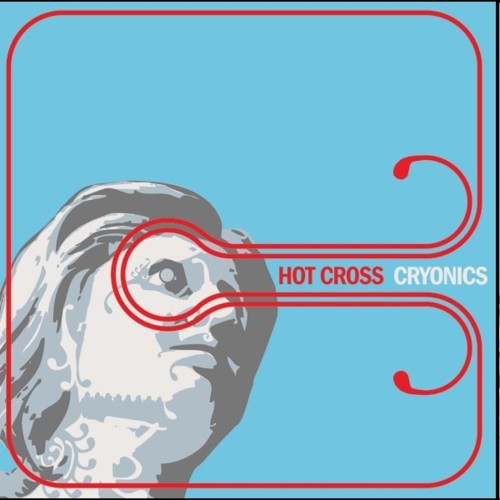
I've Never Met a Traitor I Didn't Like -- Hot Cross' Cryonics

To avoid getting mired in an excessive numbers or numerals, I'm moving away from the titling format for this discussion of these releases--also reflecting the fact that this is the last of a previously singular post broken down into the separate releases that were to compose it. I'd gotten up to this album, wrote half of it, realized it was going to be a stupidly long post and asked my friend Brian who agreed splitting things might be advisable. So, now, I'm breaking away from even that and simply writing on the albums on their own terms. I'll still tag them as part of that series, but let the posts have a little breathing space from uniformity.

This was the find that day, for sure. While Special Wishes was nice in that it wasn't going to be easy to find cheap, I've seen Harvey Milk albums float around and did not know at the time it was a rare one--indeed, I'd bought the compilation of their early singles and splits from the very same store. Of course, I learned in the course of my usual dissection and reassembly of compiled tracks into their original sources that the insert for that CD is basically the only place you can find the cover art for those old Harvey Milk singles!

Still, I picked up Hot Cross's Risk Revival a few years back, only because its listed label was Equal Vision Records, which was the first label Coheed and Cambria was on--at least, under the name Coheed and Cambria (obsessive fans know that of course the Delirium Trigger EP was released under the name "Shabutie," and it came out on the label Wisteria). Admittedly, Equal Vision does stop off into stuff that I don't feel like I have time to sift through, so this isn't a guarantee, but looking into Risk Revival led me to the track "Turncoat Revolution," which has one of the most blisteringly fantastic central riffs around (comparable in some ways to the riff from Converge's "Dark Horse" I mentioned in the previously).

Allegedly, the album is "screamo," which is one of the most derogatorily used genre names I've ever heard--both dismissive and denigrating--in almost every context I've ever seen it used. The reviews I found were the ones on Amazon, though, which meant there was only a handful of them, all three stars and all from a community embracing the genre names rather than using them as catch-all insults. I always prefer finding such reviews to get an idea of what genres mean, as I read things like "While Hot Cross may most commonly be known as the band that came after Saetia," as it gives me a nice context for what a band is to the community it comes from. Of course, I still haven't ever seen any Saetia so, despite the fact that they were clearly a central figure here, I haven't a great idea what they sound like.

The album, though, was great--sure, Billy Werner is screaming throughout the album (if you take that reductive approach of "aggressive vocals are always screaming" that doesn't appreciate the variation in methods used to achieve aggressive vocals), and yes, it's got a sense of betrayal, loss and emotional frustration and anger, but the lyrics are intelligent and interesting. But forget all that--the thing smokes:


That was probably one of the best  pseudo-blind purchases I ever made on an obscure, defunct band out of a morass of random titles--a set of releases dumped at an FYE because the labels had damaged stock, missing slipcases or re-packaged used titles. There was a lot of Equal Vision, plenty of Earache and a few other labels that would catch my eye quickly. It was the same boxes of miscellaneously labeled stuff that spawned some of the purchases mentioned here.

Soon, Hot Cross entered my regular listening for its mix of melody, aggression and expression. It manages to ride a crest of energy that more aggressively abrasive bands (such as the death metal bands I listen to) can occasionally become tiring with, never quite crossing that point as the clever guitarwork carries the sound for the part of me that appreciates the "prettier" side of things. By this time, I let Chaz over at Bull City Records know I was on the lookout (inspiring the usual response to mentions of Hot Cross: "Man, haven't heard that name in a while!") and he suggested I check out Level Plane Records, which is a label he told me would carry similar material.

So, when I saw Cryonics at the store that day, I snatched it up without hesitation as my jaw dropped for seeing "Hot Cross" on a split card in a CD section in the first place. At this point, the band apparently functioned with two guitarists, creating a different variety of more complicated and often more subdued sorts of textures, exemplified in songs like "Frozen by Tragedy" (which tends away from naked aggression) or, "A Tale for the Ages":


And, of course, what label was Cryonics released on? Level Plane.

Sunday, September 2, 2012

Tiny Music...Songs from Various Record Shops VIII -- Harvey Milk's Special Wishes

 Tiny Music...a series of entries on recent and seemingly random purchases. Why I made them, and why, perhaps, you ought to do the same--or at least take up the methodology!
Part I              Part V
Part II            Part VI
Part III           Part VII
 Part IV                        

Harvey Milk is a peculiar band. Named for the assassinated, openly gay San Francisco politician, Harvey Milk (the band) has no political associations to speak of, no clear stance on anything political, no openly gay members or anything else to indicate why they chose the name. If someone has an answer, that would be awesome. Until then, please explore their merch page and perhaps reconsider taking their attitude--whatever it is, anyway--seriously. There's weirdness, humour and experimentation melded into a band that is primarily, I suppose, sludge/doom/stoner metal. It's almost all very down tempo, loud, and heavy in the sense that it is full of low-end and pounds and thuds its way out of speakers.
Their outspoken frontman, Creston Spiers, suggested that this, Special Wishes was their best album yet, and that the acclaimed follow up from 2008, Life...The Best Game in Town was their worst. Of course, that album was my first, stumbling into a similarly random-seeming cover: another badly-angled shot of a wall, but this time bearing a crumpled poster for Iron Maiden's second album, Killers, the last with first vocalist Paul DiAnno. It's familiar enough that that one jumped out at me when I saw it, despite the fact that both albums, as you can see, give no front-based indication of who or what they are.

Stylistically, at least, there is not a huge change between the two albums as the style is pretty thoroughly their own. While notions of other extremely slow--though not quite Sleep's Dopesmoker slow--sludge bands reach your ears, eventually songs like "Once in a While" or "Instrumental" with its bizarre radio-trivia-sample frame that references the Alan Parsons Project's The Turn of a Friendly Card appear and make you wonder what is going on.

This was a lucky find, too--it's no longer in print and was not easy to find in the first place. This is part of the absolute joy of the approach I take: while you can find things online with relative simplicity in many cases, the hunt and the find, and sometimes the unrealized find, has a thrill to it that you can't get from clicking through Amazon's used section. In fairness, this did come from the used chain of stores that also once contained the extremely out-of-print Josef K album(s) and compilations for a total of $59, and they often research and price in accordance with such information. Fortunately for me--unlike when I picked up those Josef K albums which, yes, I did, despite that being $59 for two CDs--this was just priced as a plain ol' used CD at the time.

"Once in a While"

Tiny Music...Songs from Various Record Shops VII -- Out Every Window the Snap of Envy and Greed

Tiny Music...a series of entries on recent and seemingly random purchases. Why I made them, and why, perhaps, you ought to do the same--or at least take up the methodology!
Part I              Part V
Part II            Part VI
Part III                       
 Part IV                        

Friday, August 31, 2012

Tiny Music...Songs from Various Record Shops VI -- How to Compose Popular Songs That Will Sell by Bob Geldof

First, a brief interlude. Coloured vinyl is a pretty, pretty thing and I never miss a chance to show it off:


Tiny Music...a series of entries on recent and seemingly random purchases. Why I made them, and why, perhaps, you ought to do the same--or at least take up the methodology!


Thursday, August 30, 2012

Tiny Music...Songs from Various Record Shops V

Tiny Music...a series of entries on recent and seemingly random purchases. Why I made them, and why, perhaps, you ought to do the same--or at least take up the methodology!

Part II
Part III
 Part IV

Released as part of the "Original Masters" series with this cover, this is the first purely ambient solo album Eno released, two months after Another Green World, the first Eno solo album I ever bought. If you want something up-tempo, danceable, short, fun, etc, this is not an album for you by any stretch of the imagination. Ambient music is generally quite long as a result of the languid nature of the music: indeed, the genre's name is derived from the intention to make the music a part of the ambiance of an environment.

In defiance of many expectations, when I first delved into Aphex Twin, the album I was most interested in finding was not The Richard D. James album with its frenetic Drum and Bass/Jungle/etc (please, please don't ask me to figure out what electronic genres are which--I have enough trouble with distinct, classically-recognized instruments-based bands) but Selected Ambient Works, Vol. II which was a follow up to the ambient-techno (it's a different thing, promise) Selected Ambient Works 85-92. SAWII was a sprawling, 3LP, 2 cassette, 2 CD monster that was 25 tracks on vinyl and cassette and 24 on UK CD (the US release inexplicably dropped another track, which has annoyed me for years) and primarily consists of slow, beat-less tracks in the 7-10 minute range.  
Discreet Music is similarly "ambient" (not "ambient techno") in that its first half is the 31 minute "Discreet Music," which flows gently along for 30 minutes with no audible beat and nothing grating, intrusive or otherwise attention-grabbing. But it's incredibly pretty and pleasant, which is something I often find appealing, myself. The second half is a re-interpretation of Pachelbel's Canon in numerous variations, similar in end result to "Discreet Music," though it is performed by actual live strings instead.

Caustic critic Christgau called it "good for hard bits of writing," as it functions in that place that Satie envisioned a lot of his music would, to some extent: musique d’ameublement or "furniture music," as it is most commonly translated. Of course, Satie was, in some respects, creating the idea that did become ambient music. Richard D. James himself (aka the Aphex Twin) has noted the influence of Satie before, and referenced him pretty openly regarding the much more mixed album Drukqs, which contains a number of solo piano style pieces reminiscent of the peculiar French composer.

While I was out shopping for all of these things, I did eventally stumble into a (slightly mutilated) copy of Erik Satie's own writings and musings collected as A Mammal's Notebook, too. I do like the French composer's work, actually, though not, as always, to prove some kind of point about my taste or style, but because the minimalist approach to music hits the right chords--well, notes--for me. I carry around a small list of the Satie works that are apparently some of the best recordings, and own a compilation of Aldo Ciccolini playing them.

But I'm really getting away from the primary point here: Eno is known as a producer more than anything these days, or as a collaborative artist, especially when he works with David Byrne, but for a time in the 1970s he did independent work like this and Another Green World and hit various poles of music in the process. It's good stuff--this one I have listened to a few times and quite liked!

Wednesday, August 29, 2012

Tiny Music...Songs from Various Record Shops IV -- An Emotional What? Junk What?

Tiny Music...a series of entries on recent and seemingly random purchases. Why I made them, and why, perhaps, you ought to do the same--or at least take up the methodology!


With respect to a stack of some weird and out-there choices, An Emotional Fish's Junk Puppets was probably the most random selection of all. Of course, it was part of the 2 for $3 mess, so I did need to walk out with an even number of titles. Still, the cover art was intriguing, and while the metaphor of books and covers may hold, the actual literal meaning of judging inert objects by their covers can turn out quite well.

Finding out what this disc was was one of the more peculiar events of the trip, as it's one of those lingering, obscure titles in the Amazon database which has had incorrect cover art assigned (Amazon thinks this is the cover). Similarly, Wikipedia has no articles on their respective albums, despite three of them being released. They're a band from Dublin, and opened for U2 on the Zoo TV tour (on the backs of Achtung Baby and Zooropa).

Their first album was even released on U2's own label, Mother Records), after their single "Celebrate" even hit the top 5 on the US Modern Rock charts. They apparently maintained far more popularity in their home country than anywhere else and sort of fizzled after this, their third and final album. It's a bass-heavy 90s rock album that, as yet, does not jump out and grab me, but I'm still giving it some time.
Related Posts Plugin for WordPress, Blogger...